 >
> Mount Kenya National Park, or Mt. Kenya National Park, is one of the best Kenya national parks worth visiting when on a safari in Kenya.
Mount Kenya Park is a breathtaking protected area in central Kenya, dominated by Mount Kenya, Africa’s second-highest peak at 5,199 meters after Mount Kilimanjaro.
This UNESCO Biosphere Reserve is famed for its rugged glacier-clad summits, U-shaped glacial valleys, afro-alpine flora, diverse wildlife, and rich cultural significance to local communities, often seen during Kenya tours here.
Visitors are drawn here for trekking, wildlife safaris, cultural experiences, and the park’s spectacular natural scenery that they can witness while staying at some of the famed accommodation facilities in and around the wildlife safari park during Kenya wildlife tours.
Let us delve into a detailed overview of the popular Mount Kenya NP!
Key Interesting Facts About Mount Kenya National Park
- Established in 1949
- Dominated by an Ancient extinct volcano with four secondary peaks -Mount Kenya
- Over 12 rapidly receding glaciers
- Covers 715 km² and serves as a vital water catchment for Kenya
- Home to rare and endangered species on its forested middle slopes and other vegetation zones
- The rich afro-alpine flora provide habitat for over 130 bird species
- Popular for trekking, photography, and cultural visits
- Gazetted in 1997 as a park to preserve biodiversity, ecological processes, and scenic landscapes
- Ngare Ndare Forest Reserve connects Lewa Wildlife Conservancy to Mount Kenya National Park, serving as a crucial wildlife corridor.
Mount Kenya National Park Location and Size
Located in central Kenya, Mount Kenya National Park lies approximately 175 km northeast of Nairobi, the capital city where most Kenya safari itineraries commence.
The park spans 715 km² (276 sq mi), while the surrounding forest reserve adds another 705 km², making the UNESCO Heritage Site area 1,420 km² (550 sq mi) with an elevation range of above 3,000 m (9,800 ft).
The park is accessible via the Naro Moru, Sirimon, and Chogoria routes, with the Nanyuki airstrip serving as the closest air access point.
Geography of Mount Kenya Park
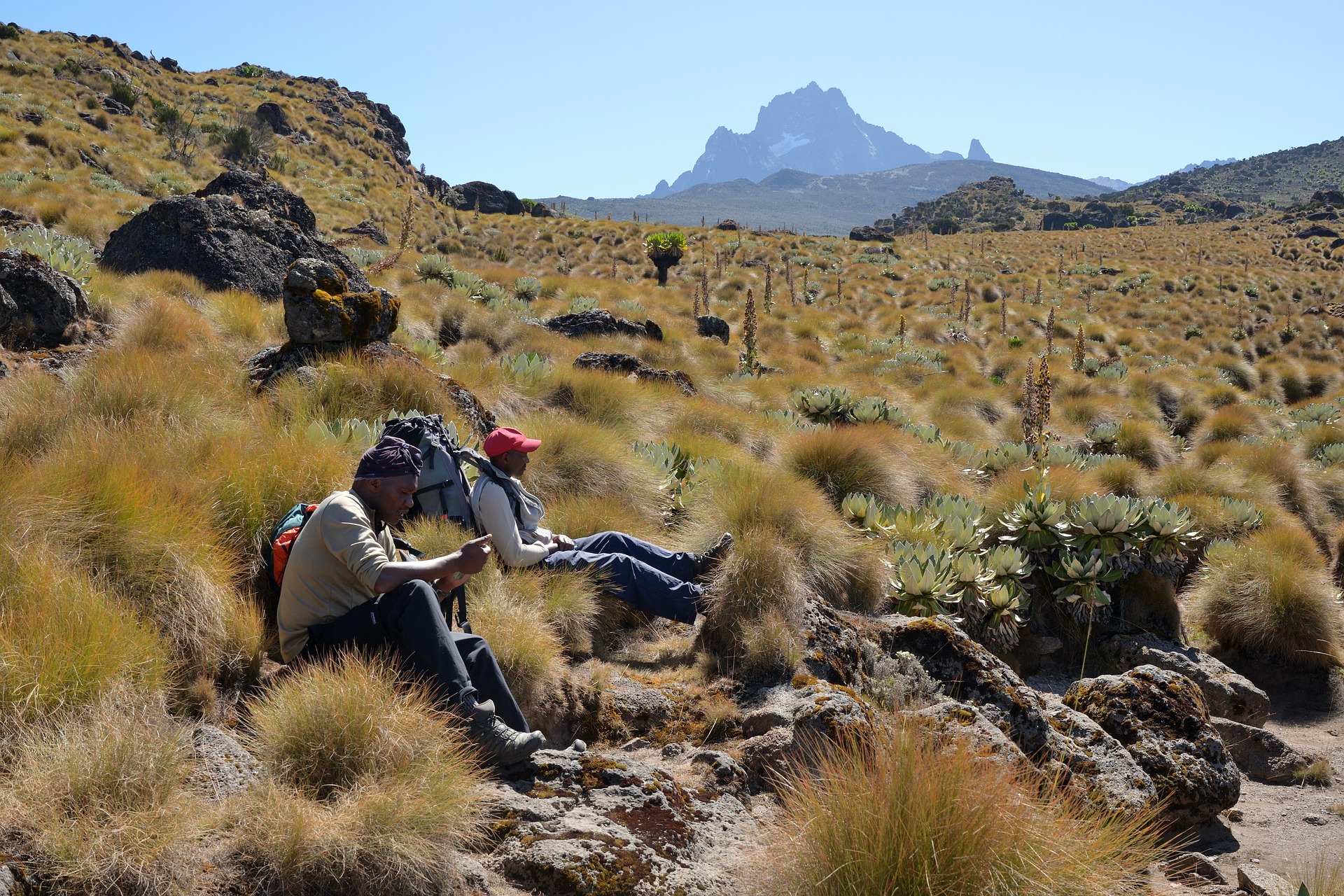
Mount Kenya NP, managed by the Kenya Wildlife Service, protects Mt. Kenya, an ancient extinct volcano in the Central part of Kenya and the second-highest peak in East Africa after Kilimanjaro, said to be about 3.1–2.6 million years old.
Its rugged glacier-clad summits, U-shaped glacial valleys, and numerous glacial moraine features form some of the most impressive landscapes on the African continent and in East Africa.
The park represents an Afro-tropical mountain ecosystem and a Biosphere Reserve (UNESCO), showcasing vital ecological and biological processes.
The entire mountain is an ecological transition zone where forested middle slopes, bamboo forest, and bamboo zone mammals give way to tussock grasslands, moorland mammals, and the spectacular alpine zone.
Here, Afro-alpine flora and subalpine flora thrive, with isolated vascular plants and alpine vegetation creating a unique habitat.
The park’s species diversity includes the hyrax, the locally threatened scarce swift, the endemic alpine swift, and rare and endangered species, reflecting its high biological richness.
From the scenic foothills and semi-arid savanna grasslands at the base to the rich alpine peaks, the vegetation zones vary dramatically.
The continuous vegetation gradually disappears as glaciers, now receding rapidly, dominate the highest peak and four secondary peaks.
This holy mountain, often called “Mount Kenya looming” above sparse wooded plains, is central to all the communities in the region and follows a traditional migration route for wildlife set between Ngare Ndare Forest Reserve and Lewa Wildlife Conservancy.
The park connects to the Ngare Ndare Forest Reserve and the Lewa Wildlife Conservancy, with the Lewa Wildlife Conservancy extension providing corridors for the African elephant population and other endangered fauna species.
The property incorporates lower-lying ecosystems, linking mountain and arid habitats toward the Indian Ocean.
Visitors can climb Mount Kenya to explore these most impressive landscapes or stay at the famous Serena Mountain Lodge on the lower slopes.
The park also features the traditional migrating route and landscapes created by ancient glacial erosion, making it a jewel of Kenya’s National heritage.
Climate And Weather in Mount Kenya National Park
The park’s climate is influenced by the Indian Ocean, creating wet conditions at various elevations.
Temperature and flora change rapidly with altitude, supporting high biological richness and unique wildlife adaptations to the ecological and biological processes rarely found elsewhere in East Africa.
History Of Mount Kenya National Park (A UNESCO World Heritage Site)
Initially gazetted as a forest reserve, Mount Kenya NP was established as a national park in 1949 to protect biodiversity, scenic landscapes, and water resources.
In 1978, it became a UNESCO Biosphere Reserve, and in 1997, the combined park and forest reserve was declared a UNESCO World Heritage Site.
Local and national priorities for tourism, conservation, and ecological preservation guided its establishment.
Additionally, a massive 272 kg (600-pound) male lion was killed near the mountain in 1993, which led to the management putting up electric fences around most parts of the park with wild fauna populations.
Mount Kenya National Park Management
The Kenya Wildlife Service (KWS) manages the wildlife safari park, ensuring wildlife protection, habitat conservation, and visitor safety during Kenya safari holidays.
Management includes guided tours, park regulations, and organized climbing and trekking routes.
Visitors must be accompanied by certified guides, and the park enforces strict waste disposal and luggage regulations.
Fencing and corridors maintain elephant migration routes while preventing crop damage in the surrounding farmland of the local people.
Mount Kenya National Park Animals and Other Attractions Seen During Kenya Tours
Some of the fascinating things to see in the Mt. Kenya NP during Kenya vacations and wildlife tours include.
1) Wildlife
The park hosts elephants, Mount Kenya tree hyrax, white-tailed mongoose, suni, black and white colobus monkeys, black-fronted duiker, the endemic Mount Kenya mole rat (common throughout the northern slopes and the Hinder Valley at elevations up to 4000 m), bushbucks, waterbucks, elands, and other small antelope species.
Rarely seen species include leopards, bongo, and the giant forest hog. Lower forest zones provide habitats for black rhinoceros and Cape buffalo.
2) Birds
Over 130 bird species are recorded in Mount Kenya NP. The birdlife includes green ibis, the endemic alpine swift, vultures, starlings, and the locally threatened scarce swift and sunbirds, supporting high bird diversity of forest bird species in afro-tropical mountain ecosystems.
3) Mount Kenya
The peaks on Mount Kenya—Batian (5,199m), Nelion (5,188m), and Point Lenana (4,984m)—offer hiking, climbing, and stunning landscapes, including alpine rivers, moorlands, and glacial tarns.
4) Local Mount Kenya Race (Meru and Kikuyu People)
The mountain is sacred to the Kikuyu and Meru communities, who perform rituals and prayers on its slopes, referring to it as Kiri-Nyaga (“Mountain of Brightness”) and worshiping Ngai or Mwene Ngai, the Supreme Being they believe in devotedly believed to live at the mountain with his wife Mumbi.
5) Unique Flora and Vegetation
Mount Kenya hosts diverse flora as vegetation varies across different points, from cultivated foothills and dense montane forests to bamboo belts, timberline rosewoods, heathlands, and the alpine zone offers grass glades and the afro-alpine giants like Dendrosenecio.
Higher up, as the continuous vegetation stops, rare subalpine plants and glacier-covered nival zones create unique ecosystems ideal for photography, ecological study, and appreciating Africa’s botanical diversity.
Therefore, these vegetation points/zones on Mount Kenya significantly influence the biodiversity found within the park.
6) Geological Formations and Mineral Springs
The park contains ancient extinct volcanic formations, numerous glacial moraine features that are receding rapidly, and mineral springs, showcasing East Africa’s geological diversity.
Visit Kenya’s Mt. Kenya NP and see all these beautiful things firsthand for lifelong memories!
Things To Do in Mount Kenya National Park
Tourists visiting Mt. Kenya NP can partake in some of these safari activities during safaris in Kenya, i.e.
1) Trekking & Climbing Mount Kenya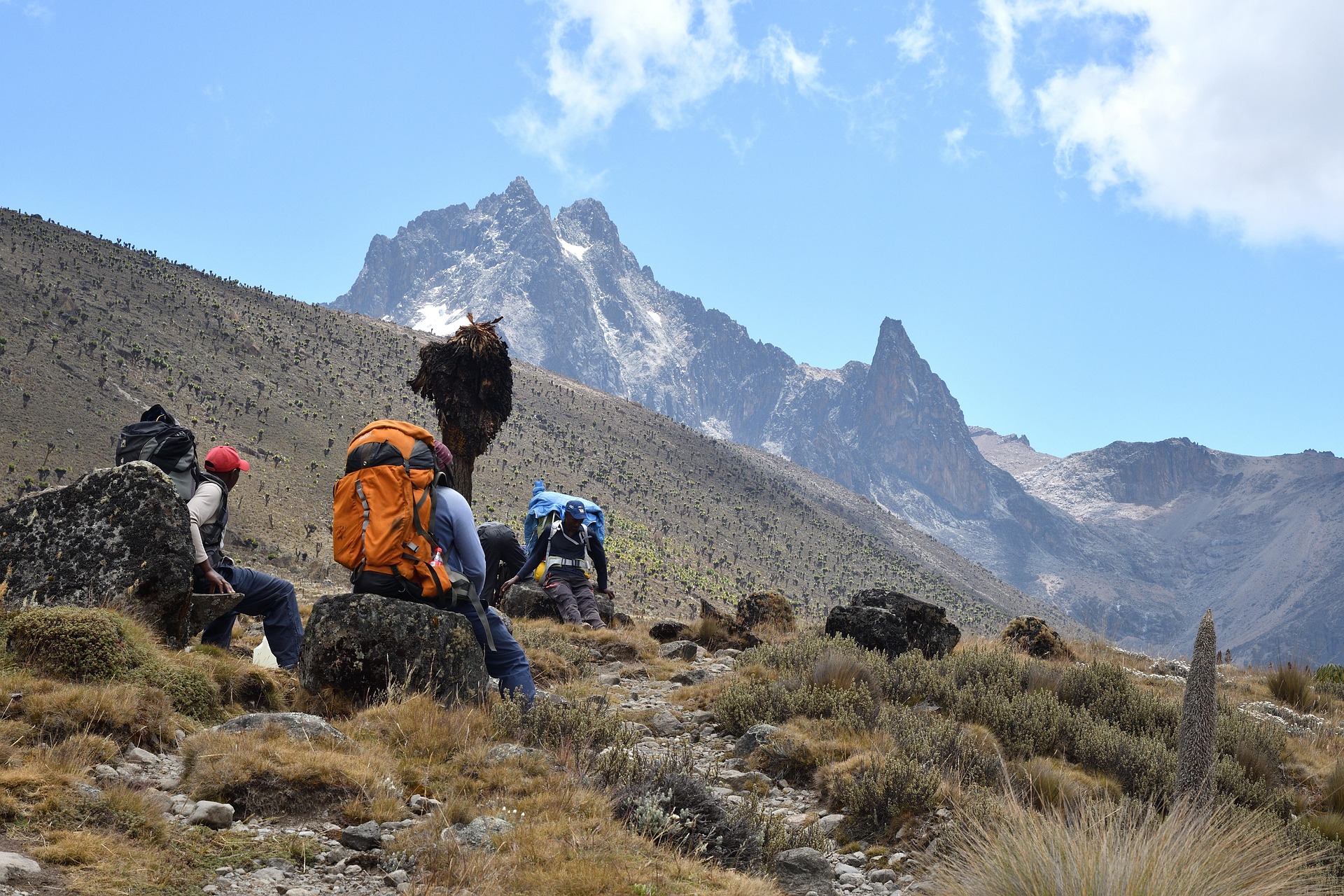
This is one of the most popular safari activities done in Mount Kenya NP, often lasting between 4-5 days.
Popular routes include Naro Moru (the main trekking route to Point Lenana that takes 3 days to complete and begins at Naro Moru town on the western side of Mount Kenya), Sirimon, and Chogoria.
Point Lenana is suitable for most hikers, while Batian and Nelion peaks require advanced climbing skills by advanced climbers and climbing equipment.
The dry seasons (June–October, January–March) are best for trekking because the wet seasons make trails slippery, so hikers are advised to plan hikes outside these months.
Serious hikers can explore Mount Kenya’s slopes on a day trip or include it in a 1–2-week Kenyan safari itinerary, often combined with Lake Nakuru and Maasai Mara.
2) Game Viewing
This is another of the popular activities in Mt.Kenya NP. Visitors can spot elephants, bushbucks, waterbucks, elands, giant forest hogs, and other wildlife in open plains and forested zones during Kenya wildlife safaris in this park.
3) Birding
Birdwatchers can observe sunbirds, green ibis, alpine swifts, and endemic species in afro-alpine and forested habitats during Birding tours in Kenya.
4) Cultural Experiences
Tourists visiting the park can engage with the Kikuyu and Meru communities to learn about rituals, prayers, and sacred practices tied to Mount Kenya during cultural tours in Kenya.
5) Scenery Viewing
Travelers touring the park can explore glacial valleys, alpine rivers, tussock grasslands, bamboo zones, and moorlands for breathtaking landscapes on a Kenya scenery trip.
6) Camping
Alongside game viewing, camping is also a popular activity in Mt. Kenya NP. The park offers public and private campsites, including Kisoi Munyao, Kinondoni, Mintos Hut, and Austrian Hut, with basic amenities such as water, toilets, and kitchens worth staying in for an immersive camping safari in Kenya.
7) Cave Exploration
Some hiking routes feature caves and mineral springs for exploration and study of geological formations worth seeing during Kenya hiking tours/Kenya safari holidays.
Partake in any of these safari activities during your Kenya vacation for unforgettable safari experiences!
World-Class Mount Kenya National Park Accommodation
Tourists visiting Kenya’s Mt. Kenya Park can stay in a variety of accommodation facilities in and around the park, ranging from budget, mid-range, to luxury lodges and hotels.
- Batian Guest House – accommodates 8 people; basic amenities include bedrooms, a kitchen, a bathroom, and caretaker services.
- Sirimon Bandas – accommodates 4 people: semi-detached bandas with bedrooms, a kitchen, and electricity.
- Public and Private Campsites – Kisoi Munyao, Kinondoni, Mathenge, Solo Camp, Majors Camp, Road Head, Mintos Hut, Met Station, Mackinders, Austrian Hut, Judmaier, Shipton, Liki North Hut; provide water, kitchen, and toilet facilities.
It is important to note that these options above have cost ranges from KSh 4,000–10,000 for citizens and US$80–180 for non-residents. Reservations are made through the KWS headquarters.
Other lodging facilities include: Serena Mountain Lodge, Fairmont Mount Kenya Safari Club, Bantu Mountain Lodge, Elewana Lewa Safari Camp, The Ark Lodge, Borana Lodge, Sweetwaters Tented Camp, etc.
Book and reserve your stay at any of these facilities for a comfortable safari stay!
Safari Prices Incurred During Mount Kenya National Park Safaris | How Much Does It Cost to Visit Mount Kenya?
Daily Park entry fees:
- Citizens/Residents: KSh 430 (adult), KSh 215 (child)
- Non-Residents: US$52 (adult), US$26 (child)
Multi-day packages range from 3–6 days, with costs between KSh 1,290–2,580 or USD 156–312.
Vehicle and guided tour fees vary depending on size and duration.
Payment can be made through the KWS Ecitizen Website using M-Pesa, Visa, or EFT.
Consult a reputable safari company in Kenya for the most accurate pricing and deals!
Access and Transportation to Mt. Kenya National Park | How Do I Get to Mount Kenya National Park?
By Road: Travel from Nairobi to the park, which is 90km -175km, takes 2–3 hours by road, depending on traffic, and is one of the major routes.
The Nanyuki-Isiolo, Nyeri-Nanyuki, and Embu-Meru roads lead to park gates (Kamweti, Marania, Burguret, and Themwe).
By Air: Nanyuki airstrip is the nearest access point for domestic flights from across different destinations, including those from Wilson Airport in Nairobi, which take about 35 minutes.
Main public transport and shuttles provide transport options with costs varying from KSH 500 to KSH 800, with traveling by taxi after public transport costing an extra fee of about KSH 2,000 TO KSH 8,000, depending on pickup location, with local tour operators facilitating park entry.
Best Time to Visit Mount Kenya National Park for Kenya Safari Excursions
Though open for tours throughout the year, the best time to visit Mount Kenya NP is during the dry seasons (June–October, January–March), which are ideal for climbing, trekking, game viewing, and birdwatching.
It is worth noting that the wet seasons (April to June (the long rains) and from November to December (the short rains)), though they bring higher rainfall, leading to lush, green landscapes, misty mornings, and abundant birdlife, they also make trails slippery, especially in bamboo and forested zones, so travelers are advised to exercise caution during trips in these months.
Safari Packing List for Mount Kenya National Park Trips
Tourists going for safaris to Kenya’s Mt. Kenya NP are strongly advised to carry some of these essentials
- Warm clothing
- Hiking gear
- Sturdy boots
- Gloves
- Camera
- Binoculars
- Sunscreen
- Insect repellent
- First aid kit
- Reserve car fuel (especially if self-driving)
- Food supplies
- Drinking water
- Camping equipment
Endeavour to inquire from your Kenya tour operator on the most recommended items to pack and wear during safaris to Mount Kenya National Park!
Guidelines To Follow During Kenya Trips to Mt. Kenya National Park
- Visitors must be accompanied by certified guides.
- Disposable plastic bottles are prohibited in the park vicinity.
- Luggage limit for guides/porters: 25 kg.
- All visitors must check in and out at park gates.
- “Leave no trace” principles apply to preserve the ecosystem.
- Maintain a safe distance from wildlife
- Follow all tour guide and ranger guidelines
Follow all these guidelines to ensure that the park’s biodiversity and you remain safe through the Kenya safari experiences in this park!
Threats And Ongoing Conservation Initiatives in Mt. Kenya National Park
Threats and dangers affecting Mount Kenya National Park include receding glaciers, wildlife-human conflict, and habitat loss, among other dangers.
However, several Conservation efforts by KWS have been initiated to eradicate most of the serious threats, including elephant corridor protection for migration purposes, wildlife monitoring, forest preservation, and environmental education programs to maintain biodiversity and ecological balance.
The Best Kenya Safari Companies Offering Mt. Kenya Park Tour Packages
Contact any of these Kenya tour operators for the best customized packages!
Mount Kenya National Park: Commonly Asked Questions
- Why Is Mount Kenya National Park Famous?
The park is popular for its glacier-clad peaks, afro-alpine flora, wildlife diversity, sacred cultural significance, nature photography, Mt. Kenya hikes, and status as a Biosphere Reserve recognized by UNESCO.
- Is Mount Kenya National Park Worth Visiting?
Absolutely. The park offers trekking, climbing, wildlife safaris, birdwatching, cultural experiences, and stunning scenery that varies with different elevations in the park.
- What Is So Special About Mt. Kenya?
It is Africa’s second-highest peak, an ancient volcano, and a sacred mountain with unique ecosystems and biodiversity that extends to the nearby Ngare Ndare Forest Reserve, etc.
- Are There Lions in Mount Kenya National Park?
Lions are rarely seen but have historically been recorded in the park. Other common wildlife includes elephants, bushbucks, elands, and tree hyrax.
- What Animals Are in Mount Kenya National Park?
Elephants, bushbucks, waterbucks, elands, mole rats, tree hyrax, giant forest hogs, black and white colobus monkeys, and over 130 bird species.
Conclusion
Mount Kenya National Park crowns Africa’s second-tallest peak with glaciers, afro-alpine moorlands, rare zebras, and diverse climbing routes like Sirimon and Chogoria. Summit for breathtaking vistas and wildlife. Contact us now to plan your Mount Kenya safari and conquer this UNESCO World Heritage gem!

Over 300 excellent reviews on TripAdvisor
Over 50 excellent reviews on Safaribookings.
Over 50 excellent reviews on Safaribookings.
12+ years of experience.
Best price guarantee.

Robert
Speak to a specialist to plan your customized safari and experience safari tours like never before...
Get expert safari advice: Call or arrange a video appointment with our tour specialists.