 >
> ASTOUNDING FACTS ABOUT UGANDA
If you’re planning an African safari to East Africa, these astounding facts about Uganda will show you why it’s so special.
Right in the heart of East Africa, Uganda — the “Pearl of Africa,” as Winston Churchill called it — is a landlocked country packed with stunning scenery, rich cultures, and incredible resilience.
From misty forests where mountain gorillas live to the roar of Murchison Falls on the Victoria Nile, Uganda pulls you in with natural beauty and deep heritage. It’s a top eco-tourism spot.
You’ve got Lake Victoria — Africa’s biggest freshwater lake and the second-largest in the world — plus half of all mountain gorillas on the planet, and more than 50 ethnic groups.
Whether you love wildlife, history, or culture, Uganda delivers an adventure you won’t forget.
Here’s a guide to the most fascinating things about Uganda — its geography, culture, history, wildlife, economy, and more — and why it’s a must-visit in East and Central Africa.
Quick Facts About Uganda
Want a fast look at what makes Uganda stand out for safaris and culture? Here’s the snapshot:
- Location and Borders: Landlocked in East and Central Africa. Borders South Sudan, Kenya, Tanzania, Rwanda, and the Democratic Republic of the Congo. Covers 241,038 square kilometers — roughly the size of Oregon.
- Capital City: Kampala — the “City of Seven Hills.” Home to 4.2 million people, with busy markets and cultural spots.
- Population: About 50 million. One of Africa’s most densely populated countries. Median age is just 16.2 years.
- Official Languages: English and Swahili, plus 40+ local languages like Luganda. You won’t find that kind of language mix in many African countries.
- Currency: Uganda shilling (UGX). US dollars are widely accepted for tourism.
- Climate: Two rainy seasons — March-May and September-November — and two dry seasons — December-February and June-August. Dry seasons are best for gorilla trekking and Nile rafting.
- National Symbols: The grey crowned crane is on the flag. The Uganda Kob antelope also represents grace and resilience.
- Independence: October 9, 1962, from Britain. Celebrated every year with parades and matoke feasts.
- Tourism: About 1.5 million visitors a year. Adds $1.88 billion to GDP, thanks to gorilla safaris, birding, and its 10 national parks.
- Unique Features: The Nile starts at Lake Victoria. Uganda has 11% of the world’s bird species — making it a top birding spot — and 8% of mammal species.
Wildlife lovers travel here from all over. These basics set the scene for what makes Uganda amazing.
Interesting Facts About Uganda’s Culture and Ethnic Diversity
Uganda’s culture is incredibly rich — over 57 tribes and nine ethnic groups make it one of the most diverse countries anywhere.
Main groups include Bantu, Nilotics, Nilo-Hamites, and Hamites. From the Baganda in central Uganda to the Acholi in the north, that diversity shows up in music, dance, festivals, and daily life.
The Baganda are the largest group — about 17% of the population — and central to the historic Buganda Kingdom.
The Kasubi Tombs in Kampala, a UNESCO World Heritage Site, hold royal relics in thatched palaces. You can tour them to see 13th-century Buganda traditions like bark cloth making and learn about Baganda culture.
In western Uganda, the Banyankole are famous for cattle culture. Visit cultural villages near Queen Elizabeth National Park to join cow milking ceremonies or taste emupa — fermented milk.
In the north, the Acholi perform Bwola warrior dances that tell stories and help heal communities. You can see them on Uganda cultural tours.
Religion ties it together: 80% Christian — mostly Roman Catholic and Anglican — 14% Muslim, and some traditional beliefs still shape ceremonies.
Festivals like the Kabaka’s Birthday showcase Buganda traditions — bark cloth skirts called kikooyes and luwombo stews.
Food unites everyone. Matoke — steamed plantains — and posho — maize porridge — are at every communal feast.
In Kampala, street food like Rolex — chapati with eggs — mixes local and global flavors.
Stay with the Batwa pygmies near Mgahinga Gorilla National Park and hear forest stories from traditions going back 60,000 years.
Uganda also hosts 1.5 million refugees from South Sudan and the DRC. That inclusive spirit is part of the culture.
In Uganda, culture isn’t just something you watch — you feel it. Every visit turns into a real exchange.
Facts About Uganda’s Geography and Natural Features
Uganda’s landscapes are a dream for nature lovers — equatorial lakes, volcanic peaks, and fertile plateaus.
It sits right on the equator in East Central Africa, and that gives it crazy biodiversity. Rainforests run into savannas, all on rich volcanic soil. Lake Victoria anchors central Uganda.
It’s the largest tropical lake in Africa and the second-largest freshwater lake in the world. Shared with Kenya and Tanzania, it’s where the Nile starts.
At Jinja’s Owen Falls, you can raft past hippos. Boat trips to the Ssese Islands feel like a beach escape without the ocean.
In the west, the Rwenzori Mountains — “Mountains of the Moon” — climb to Margherita Peak at 5,109m, Africa’s third-highest.
Hikers go through glacier valleys. Lake Albert sits in the Great Rift Valley, full of crocodiles. Mount Elgon in the east has the world’s largest volcanic caldera — 40km wide — and great trekking.
Murchison Falls, in northern Uganda’s Murchison Falls National Park, is where the Victoria Nile squeezes through a 7m gap and drops 43m. It’s one of Africa’s most powerful waterfalls.
Central and southern Uganda are densely populated and fertile — think banana plantations and crater lakes like Nyamurapi.
The tropical climate and rainy seasons feed rivers like the Albert Nile. Dry seasons sharpen the savannas, home to 11% of global bird species and 8% of mammals — including endangered gorillas in Bwindi Impenetrable National Park.
From kayaking the Nile and Lake Victoria to climbing the Rwenzoris, Uganda’s geography is an adventure in itself.
Historical Facts About Uganda
If you love history, Uganda’s past runs deep — kingdoms, colonial rule, struggle, and resilience.
Before colonialism, kingdoms like Buganda thrived. “Uganda” actually comes from the Swahili word for “land of the Ganda.”
British explorers Speke and Grant found the Nile’s source in 1862. By 1894, Uganda was a British Protectorate.
The railway from Mombasa helped cotton exports but also stirred local resistance. Independence came October 9, 1962, with Kabaka Mutesa II as president and Milton Obote as prime minister.
But it got turbulent fast. Obote’s 1966 coup exiled Mutesa. Then Idi Amin’s 1971 military coup led to a brutal regime from 1971–1979 — around 500,000 lives lost.
Tanzania invaded in 1979 and ousted Amin, but instability continued. Four different leaders took power in 1979 and 1980.
The Bush War from 1980–1986 ended with Yoweri Museveni and the National Resistance Movement taking power. Since 1986, Museveni has brought relative stability.
Northern insurgencies like the LRA were largely ended by 2006. You can feel this history in Entebbe’s 1898 botanical gardens, old railway relics, or Independence Day celebrations with Buganda drummers.
From colonial rule to modern recovery, Uganda’s history shapes everything today.
Facts About Wildlife and Conservation in Uganda
Uganda is a wildlife powerhouse. 10 national parks and 12 reserves, all run by the Uganda Wildlife Authority. Uganda’s Safari Parks
Uganda Safari Parks in Eastern, Western, and Northern Uganda

- Bwindi Impenetrable National Park: UNESCO site in the southwest. Home to 459 gorillas — half the world’s 1,063. Also 400 plant species and rare Albertine Rift birds. Gorilla trekking permits are $800, and the money helps Batwa community projects.
- Mgahinga Gorilla National Park: Also has gorillas, plus Virunga volcano hikes and golden monkeys.
- Murchison Falls National Park: In the north. The Nile plunges 43m through a narrow gap. Boat safaris show elephants and 450 bird species.
- Queen Elizabeth National Park: Western Uganda. Famous for tree-climbing lions — rare behavior — plus 600+ bird species and 600 hippos in the Kazinga Channel.
- Kibale Forest: Central Uganda. Highest chimpanzee density in Africa — it’s the primate capital.
- Lake Mburo: Impalas and Burchell’s zebras on new safari trails.
Others: Rwenzori Mountains NP, Mount Elgon NP, Semuliki NP, and Kidepo Valley NP.
Uganda Wildlife Species in Parks, Lake Victoria, and Other Tourist Places
The Big Five, plus gorillas, chimps, golden monkeys, other primates, reptiles, and amphibians.
Over 1,073 bird species — 11% of the world’s total — including the grey crowned crane and shoebill. That makes Uganda a top birding country.
Lakes like Victoria and Bunyonyi are full of fish and aquatic life.
Conservation: Anti-poaching drones, eco-tourism, and community projects protect habitats.
Entebbe Zoo helps with species programs.
Ziwa Rhino Sanctuary keeps rhinos safe. Uganda’s wildlife gives you up-close, unforgettable encounters.
Economic Facts About Uganda
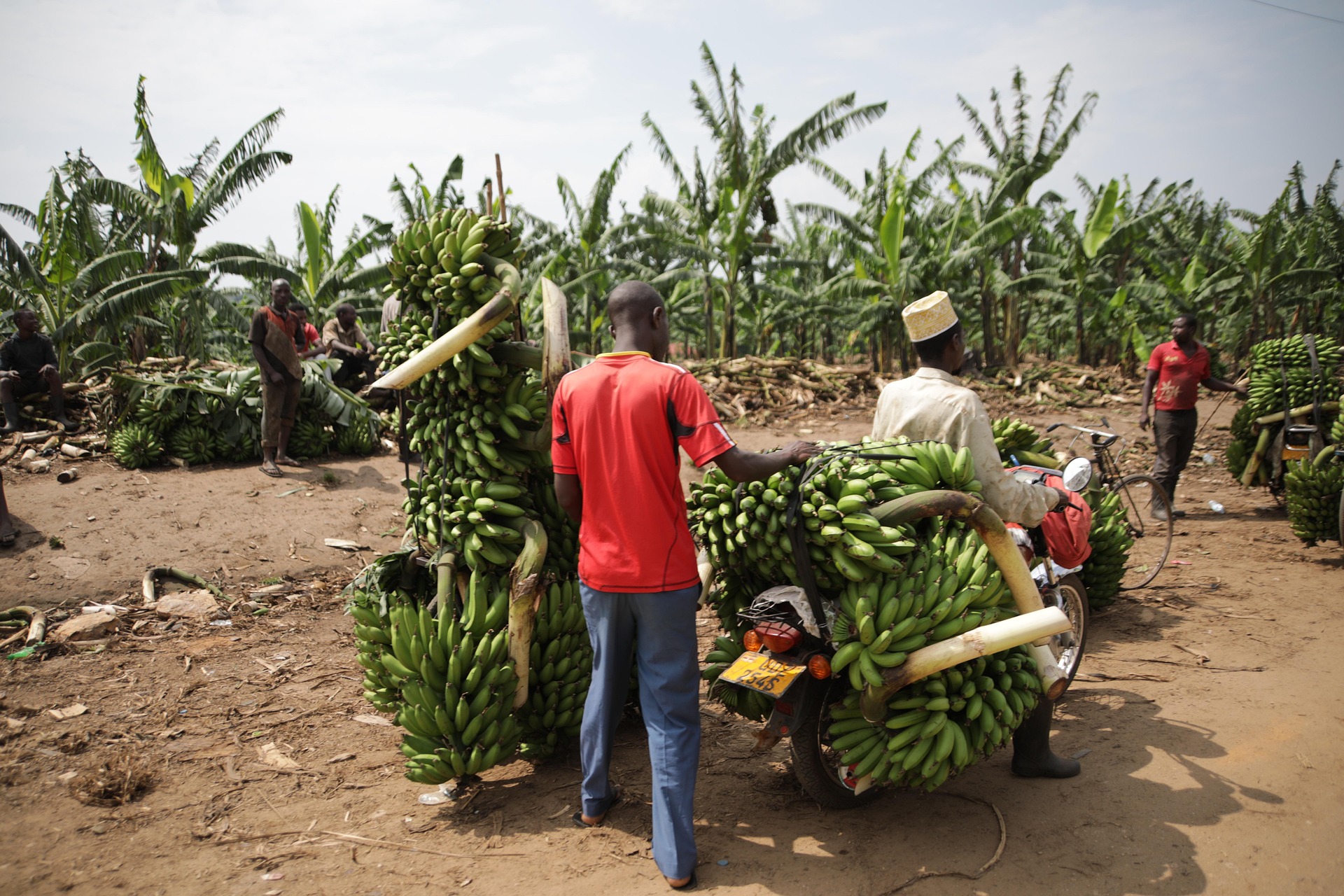
Agriculture is the backbone — coffee, tea, flowers, bananas. Uganda is second in the world for bananas and top-10 for Robusta coffee.
Tourism brings in $1.88 billion a year, creating jobs in lodges and guiding.
Oil was found in Lake Albert and should start producing by 2025.
Gold and rare minerals add to that. GDP growth is about 6%, but poverty remains, especially in the north and northeast after years of LRA conflict.
High birth rates and population growth put pressure on farmland. But women’s co-ops and better access to contraception are helping.
Corruption and poverty are still challenges. Uganda is one of the world’s poorest and most corrupt countries by some measures.
But agriculture — 70% of the economy — keeps things moving across all regions.
People and Demographic Facts About Uganda
Uganda has 50 million people and is one of Africa’s most densely populated countries. 78% are under 30. Median age: 16.2.
The Baganda are biggest in central Uganda. Banyankole are cattle keepers in the west. Basoga farm near Lake Victoria.
Over 41 languages are spoken — Luganda, Acholi, and many more. Family is central. Ankole weddings, for example, involve cows as bridewealth.
Uganda hosts 1.5 million refugees from South Sudan and the DRC. That spirit of ubuntu — hospitality — means travelers are welcomed like family.
Health issues like maternal mortality persist. But low tobacco use and lively markets show progress.
Young people are driving change — Makerere University even built Uganda’s first car. Rolex vendors in Kampala show that hustle. Every visit feels dynamic and warm.
Facts About Uganda’s Government and Politics
Since 1986, President Yoweri Museveni and the National Resistance Movement have led Uganda.
They brought stability after civil war, though the 2021 election raised human rights concerns.
Uganda is a presidential republic. Multiparty politics returned in 2005. Parliament meets in colonial-era buildings in Kampala.
Prime Minister Robinah Nabbanja handles executive duties. Politics affects tourism. After Idi Amin, the Uganda Wildlife Authority was created in 1996 to protect parks.
Uganda’s refugee policies are praised globally — millions from neighboring countries live here. English as an official language makes travel easier.
Uganda is generally safe for solo travelers.
Environmental Facts About Uganda
Uganda’s tropical climate supports huge biodiversity, but deforestation and wetland loss are problems. Lake Victoria deals with pollution and water hyacinth.
71.9% of land is used for farming, and overgrazing is an issue. Uganda signed the Paris Climate Accord and the Biodiversity Convention.
Still, only 6% of waste gets recycled. Eco-tourism like gorilla trekking helps fund conservation. Uganda is trying to lead on green issues despite the challenges.
Military Facts About Uganda (Relations with the Democratic Republic of the Congo, South Sudan, etc)
The Uganda People’s Defence Force (UPDF) has about 50,000 members — Army, Air Force, Special Forces.
It grew out of British colonial forces and now does peacekeeping in the DRC, South Sudan, and Somalia.
With the Uganda Police and Local Defense Units, the UPDF keeps things stable, especially in the north. That helps keep safari parks and cultural sites safe for tourists.
Commonly Asked Questions About Facts About Uganda
Why Is Uganda Called the Pearl of Africa?
Winston Churchill visited in 1907 and called it that because of its beauty, wildlife, and vibrant culture.
What Are 5 Interesting Facts About Uganda?
- The Nile River starts at Lake Victoria in Uganda.
- Half of all mountain gorillas live in Bwindi and Mgahinga.
- Queen Elizabeth National Park has 600+ bird species and tree-climbing lions.
- Over 50 ethnic groups make up a rich cultural mix.
- One of Africa’s most densely populated countries, with incredible landscapes.
What Is Uganda Best Known For?
Gorilla trekking, diverse national parks, world-class birding, and genuinely warm people. It’s one of Africa’s friendliest countries.
Is Uganda a Poor or Rich Country?
It’s a developing country. 20–30% live below the poverty line, but the economy is growing thanks to farming, tourism, and future oil.
What Is a Fun Fact About Uganda for Kids?
In Queen Elizabeth National Park, lions climb trees — and that’s super rare and cool to see on safari!
What Are Ugandans Known For?
Warmth, resilience, and hospitality. Visitors often say they feel like family.
What Is Unique in Uganda?
The mix: Lake Victoria, the Nile’s source, mountain gorillas, and 1,000+ bird species. You get it all in one country.
In summary, Uganda — the Republic of Uganda — is a true jewel in Sub-Saharan Africa. The Nile’s source, Africa’s biggest lake, half the world’s mountain gorillas, and rich cultural heritage all in one place.
From Kampala’s seven hills to the snow on the Rwenzoris, the landscapes and 10 national parks managed by the Uganda Wildlife Authority make for unbeatable safaris.
Yes, the history is tough — British protectorate, Idi Amin’s regime, the Bush War — but since 1986, Museveni’s government has brought relative stability and growth.
With affordable tours — around $3,865 for an 8-day primate safari — plus welcoming people, diverse cultures, and strong conservation, Uganda stands out.
Plan your trip to the Pearl of Africa for an adventure you’ll never forget in East and Central Africa.
Want more Uganda facts or help planning a safari? Reach out — we’re trusted operators who know Uganda inside out.

